


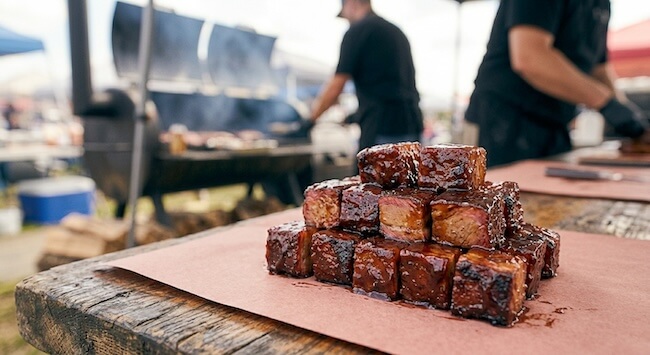
A classic sign of an amateur pitmaster is what they throw away. When you are trimming a full slab of pork ribs down to a neat, uniform St. Louis cut, you remove a significant portion of meat, fat, and cartilage from the top edge. In many backyards, these trimmings are destined for the trash or, if the dog is lucky, the bowl.
For a competition cook, however, that pile of "waste" represents opportunity. In the world of high-stakes BBQ, efficiency and yield are critical. Those trimmings, specifically the cartilage-rich rib tips, can be transformed into one of the most decadent, high-yield, and crowd-pleasing bites on the circuit.
We’re not talking about simple leftover snacks. We are talking about prepped, squared-off, competition-style smoked rib tips, sometimes referred to as pork rib tip burnt ends. By applying the same rigorous prep and cooking standards to these trimmings as you do to the main slab, you can turn trash into a secondary competition entry, or a legendary appetizer that anchors your next BBQ team catering gig.
When you buy a "full packer" rack of spare ribs, it includes the sternum, costal cartilage, and the "flap" or "skirt" meat that runs along the top, uneven edge. Trimming this section away leaves you with the uniform, rectangular rack required for a standard St. Louis entry. If you want to learn more about selecting the best cuts of pork before making your first slice, check out our guide on how to buy pork ribs.
According to USDA guidelines for meat grading and cut standards, spare ribs contain the sternum and rib cartilage, which must be separated to achieve a true St. Louis style cut.
This byproduct, which often makes up 25-30% of the total weight, consists of:
Knowing how to cook St. Louis rib tips means understanding that these pieces require low-and-slow heat just like the ribs, but their irregular shapes mean they cook at different rates.
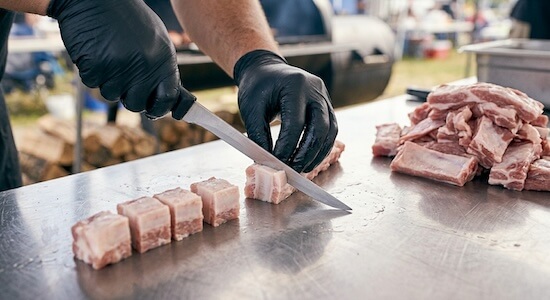
The secret to competition-style rib tips is visual consistency. We move beyond the rough-cut chunks found at standard BBQ joints and focus on uniformity. The goal is to create bites that are roughly the same size and thickness so they cook evenly and present beautifully.
During your initial St. Louis trim, carefully separate the thin skirt meat (the flap) from the cartilage-heavy tips below it. The skirt meat is lean and will cook quickly, often faster than the tips. Just as you would trim and manage fat on bigger cuts, clean execution here prevents uneven cooking and bitter, burnt bits.
Once the main trimmings are separated from the rack, use a sharp boning knife to square off the edges of the largest trimmings. Avoid the smallest, thinnest pieces.
Your target is consistent, rectangular or square cubes, roughly 1.5 to 2 inches on each side. The thickness will vary, so try to group similar thicknesses together in the same pan during the cook.
Treat your squared-off rib tips exactly like you treat your main ribs during the first phase of the cook. This is where you establish bark and smoke flavor.
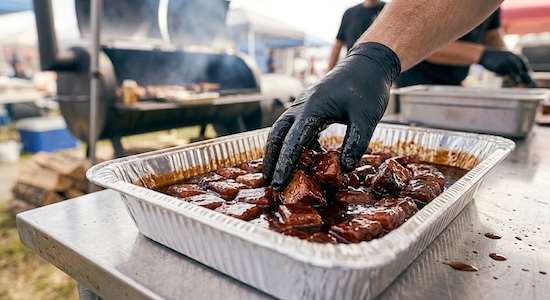
This final step transforms firm cartilage into melt-in-your-mouth appetizers. Transfer the smoked rib tips to a shallow aluminum foil pan. Add a competition braising liquid (a blend of apple juice, peach nectar, and melted butter works exceptionally well) to coat the bottom of the pan without submerging the tips.
Cover the pan tightly with foil and return it to the smoker for another 1 to 2 hours until probe-tender. Once tender, drain the braising liquid, toss the tips in your competition glaze, and return the pan uncovered to the heat for 15 minutes to set a glossy, sticky coat.
Mastering how to cook St. Louis rib tips turns every pound of meat you buy into high-yield success. But executing award-winning barbecue requires a complete, end-to-end strategy, from knife skills and meat selection to precise fire control.
If you are serious about stepping up your pit game and consistently placing at the top of the call sheet, learn directly from the best in the business. BBQ Champs Academy gives you direct, on-demand video access to World Champion pitmasters. Learn the exact step-by-step techniques, secret injection recipes, timeline strategies, and more used by the pros who win grand championships week after week. Unlock pro barbecue mastery in your own backyard. Grab your All-Access Pass today!


