


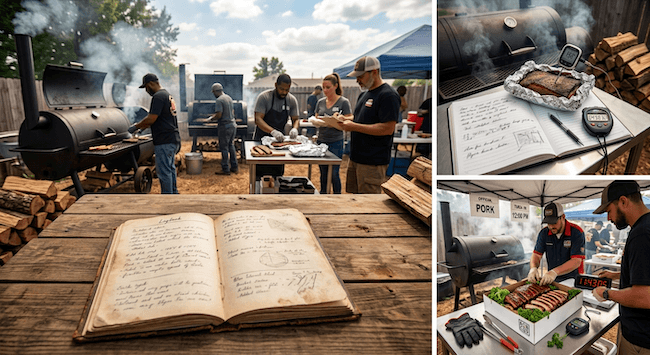
Ask any seasoned contest team, and they will tell you that a winning BBQ turn-in box isn't just the result of a great rub or high-grade meat. It is forged through execution and precise time management. On a high-stakes competition layout, you are not simply cooking four categories of protein; you are managing a complex choreography of fires, temperatures, rests, and turn-in deadlines.
Without a reliable schedule, a single delayed cook or a misjudged fire rest can send your entire game plan into chaos. Knowing how to structure a seamless competition BBQ timeline is what separates the teams sitting in the crowd from the ones walking up to receive a trophy.
In this article, we will cover the core mechanics of how to build a competition BBQ that is foolproof, manage your pit workflow, and keep your entry boxes right on schedule.
The single most critical rule of creating a BBQ competition timeline is simple: always build your schedule completely in reverse.
In major sanctioning bodies like the Kansas City Barbeque Society (KCBS), turn-in windows are absolute. If you are even one second past your designated time slot, your entry is disqualified.
To map out your timetable effectively:
[Turn-In Deadline]
▲
│ - 15 mins (Box Prep & Slicing)
│ - 30 to 60 mins (Resting Period)
│ - X Hours (Total Cook & Wrap Time)
│ - 30 mins (Prep, Injection & Seasoning)
▼
[Target Start Time]
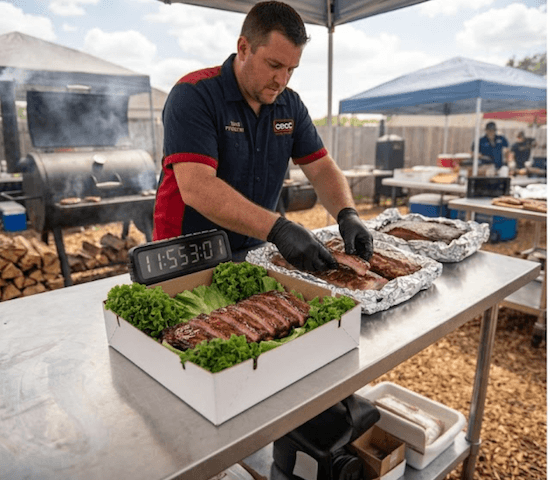
A successful weekend schedule spans far beyond the actual cooking hours. Your master document needs to cover every phase of the contest from arrival to the final turn-in.
Your timeline should start the moment you roll onto the contest grounds. Plan out time for setting up your site, running power, lighting pits, and passing your mandatory meat inspection. Slicing, trimming, and injecting cannot begin until your raw meats have been cleared by an official inspector.
Running multiple categories on limited pit space requires tactical timing. Your timeline must map out when pits need to be brought up to temperature, when wood chunks need to be added, and when grate space transitions from one protein to another. Failing to plan fuel top-offs or pit transitions leads to sudden temperature drops, which ranks high among common BBQ mistakes made by novice teams.
Managing humidity levels inside your smoker during back-to-back cooks is equally important. Determining whether to utilize a proper water pan vs dry pan setup can help maintain pit moisture throughout long overnight shifts without suffocating your fire.
The window between your first and last turn-in is usually an intense, high-energy two-hour sprint. Every step during this stretch needs to be assigned beforehand. One teammate should monitor the clock and handle runner duties, while the head pitmaster focuses entirely on slicing and box presentation.
To ensure your team maintains optimal sanitary conditions during high-speed prep, review food safety guidelines provided by the USDA Food Safety and Inspection Service.
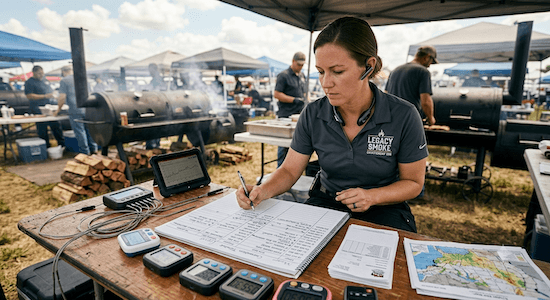
Even the most meticulous schedule will encounter unexpected variables on contest day. A sudden rainstorm can pull heat out of your offset smoker, or a stubborn flat muscle might stay stuck in the stall longer than expected.
A great competition schedule is built to adapt:
Building an effective timeline takes the stress and guesswork out of contest day. By mapping out your schedule in reverse, building in generous resting buffers, and keeping your pit workflow organized, you give your meat the best possible chance to shine in front of the judges. Master your time management, and you will take a massive step toward consistent calls at the awards ceremony.
Want to learn the exact, minute-by-minute competition timelines and game plans used by world-champion pitmasters? Join us here at BBQ Champs Academy today! Go grab your All Access Pass to unlock step-by-step video training taught by legendary Grillmasters and Pitmasters!


