


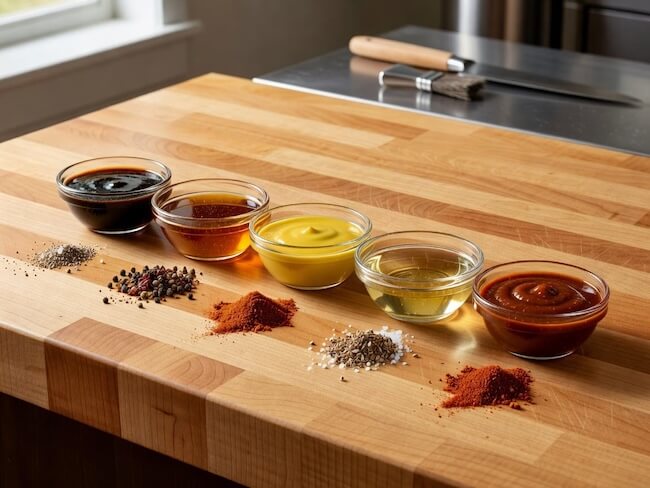
Think a binder is only glue for your rub? Not quite. That thin layer under your seasoning can completely change how evenly the rub sticks, how much falls off during handling, and how your final bark sets on the smoker.
While mustard, oil, hot sauce, and plain water all get the job done as binders for BBQ, none of them is magic, and no single option wins every cook. The right choice depends entirely on the cut of meat, the texture of your rub, and the specific finish you want to achieve.
In this article, we’ll break down what a binder really does and how to make sure you know exactly how to choose the right binder for BBQ.
At its core, a binder simply helps the BBQ rub grab the surface of the meat. Dry meat and coarse rub can be a messy combination, but a light coat of liquid gives salt, pepper, sugar, and spices something to cling to so coverage stays perfectly even. This matters most on larger, heavier cuts like brisket and pork butt, where you are handling the meat extensively; less rub left behind on the prep tray means more consistent coverage on the smoker.
Beyond adhesion, binders can subtly affect your bark and flavor. As the cook begins, the liquid mixes with the rub and surface moisture, changing how the crust hydrates, darkens, and firms up. However, this effect is usually minimal. A binder should support the rub, not overpower it. If you can clearly taste your binder at the end of a long cook, you probably used too much.

When trying to figure out how to choose the right binder for BBQ, the golden rule is to think thin, not heavy. You are lightly coating the surface to create tackiness, not pouring on a sauce. Let’s break down some of the top choices when it comes to BBQ binders:
Choosing a binder gets much easier when you stop asking what is universally "best" and start asking what is right for your specific scenario. The goal is to balance the weight of the meat and the coarseness of the rub against the total time the meat will spend in the smoke.
Brisket and pork butt, for example, handle mustard well because the long cook time breaks down the binder’s acidity, while the heavy, irregular surface of the meat requires maximum "grip." Alternatively, chicken and seafood often shine with oil or water to keep the exterior from becoming gummy, allowing the lighter seasoning to shine.
To help you decide at the prep table, here is a quick guide on the best binders for BBQ based on the cut:

Beyond the meat itself, consider your seasoning. Coarse, heavy-convection rubs need a stickier foundation like mustard to stay anchored during the "sweating" phase of the cook. Fine, powdery rubs often need nothing more than the meat's natural moisture or a light water mist to set.
Remember that time is a flavoring agent as well. Short cooks don't give strong binders enough time to mellow out; a bold hot sauce will remain highly noticeable on a 45-minute chicken cook, whereas it would be an invisible background note on a 12-hour brisket.
There isn't one definitive binder waiting at the end of the pitmaster debate. Mustard, oil, hot sauce, and water all have a permanent place in outdoor cooking as effective binders for BBQ, and the right call always comes down to the meat, the rub, and the bark you are chasing. If you want to stop guessing and start cooking like a professional, it takes more than just choosing the right liquid; it takes mastering fire control, meat selection, and precision trimming.
To truly elevate your backyard or competition game, check out the in-depth online BBQ cooking classes here at BBQ Champs Academy. Taught by some of the top professional Pitmasters, these courses break down the exact, step-by-step techniques used to win championships and master your grill.
Grab your All-Access Pass today to unlock exclusive video tutorials and insider secrets from the best in the business!


